
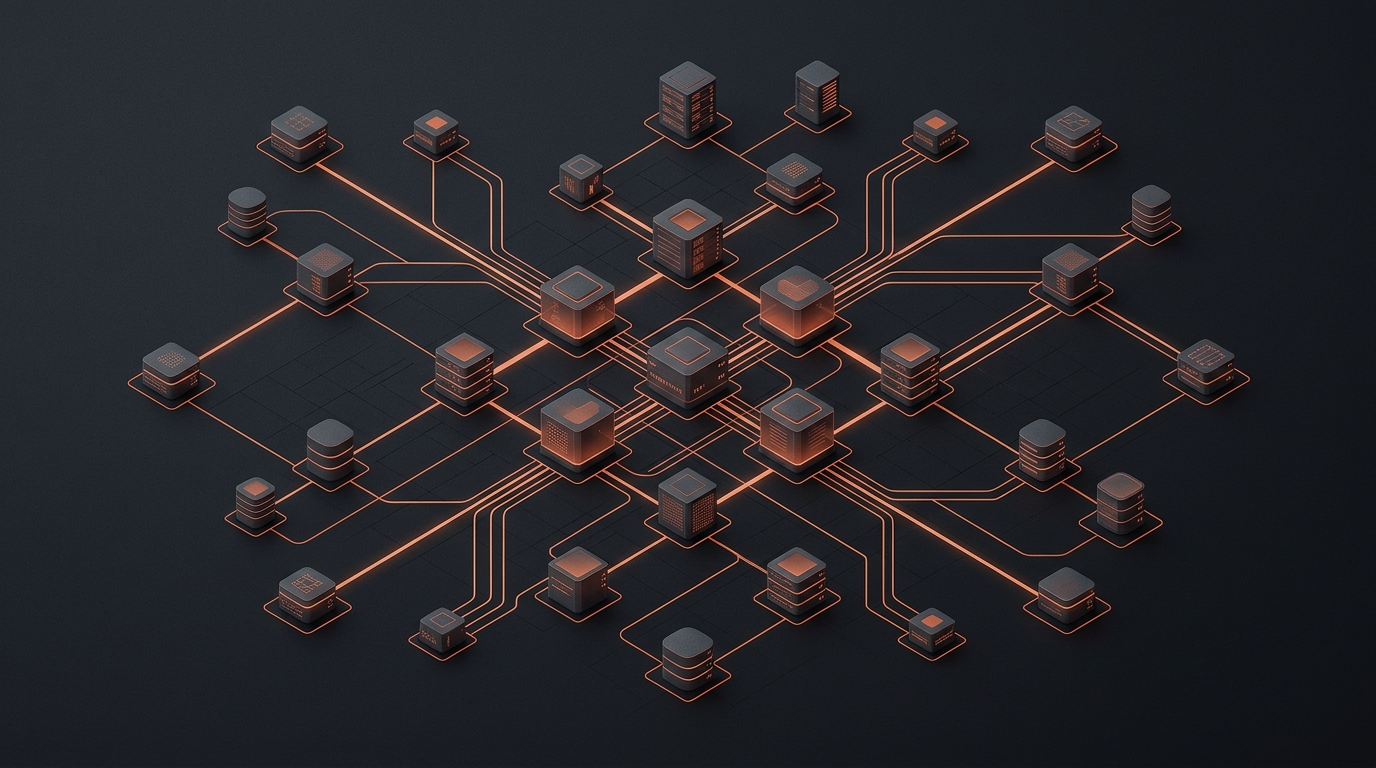
As we navigate the landscape of 2026, cloud [[[architecture](/blog/single-process-architecture-in-rust-why-we-rejected-microservices-for-an-edge-ai-platform)](/blog/shipping-a-cloud-product-build-privacy-and-contract-risk-into-the-architecture)](/blog/architecture-patterns-the-six-shapes-a-system-can-take-and-why-they-are-not-a-menu) has shifted from managing virtual machines to orchestrating complex, event-driven mesh networks. The focus has moved decisively toward ‘invisible infrastructure,’ where the developer experience is decoupled from the underlying hardware constraints, yet performance tuning remains as critical as ever.
Modern cloud design is no longer just about high availability; it is about resilience through granular isolation and intelligent traffic routing. AWS solutions architects are increasingly prioritizing cost-aware observability and ephemeral compute models that reduce the blast radius of inevitable system failures.
The Shift to Event-Driven Orchestration
The monolithic integration patterns of the early 2020s have largely been supplanted by asynchronous, event-driven architectures. By utilizing services like Amazon EventBridge Pipes and Lambda, engineers can now build highly decoupled systems where components communicate via schema-validated events rather than direct API calls.
This pattern introduces significant complexity in distributed tracing, necessitating a robust observability strategy. In 2026, the standard is to implement OpenTelemetry natively within the application code, ensuring that trace context propagates across asynchronous boundaries.
Implementing Asynchronous Decoupling
import { EventBridgeClient, PutEventsCommand } from '@aws-sdk/client-eventbridge';

const client = new EventBridgeClient({ region: 'us-east-1' });

async function dispatchEvent(payload: Record<string, any>) {
  const command = new PutEventsCommand({
    Entries: [{
      Source: 'com.myapp.service',
      DetailType: 'OrderCreated',
      Detail: JSON.stringify(payload),
      EventBusName: 'default'
    }]
  });
  return client.send(command);
}
Edge Computing and Locality
With the maturation of AWS Wavelength and CloudFront Functions, moving logic to the edge is no longer a niche optimization but a baseline requirement for low-latency applications. The challenge lies in state management; when computation occurs at the edge, maintaining consistent state across global regions requires a tiered storage strategy.
Architects are now using DynamoDB Global Tables with fine-grained TTL settings to ensure that edge-proxied data remains consistent while minimizing cross-region replication costs. This approach effectively balances the trade-off between user-perceived latency and eventual consistency overhead.
Infrastructure as Code (IaC) Evolution
The era of manual console configuration is definitively over. In 2026, IaC is expected to be ‘intelligent’—using policy-as-code frameworks like OPA (Open Policy Agent) to enforce security and cost guardrails at build time. AWS CDK has become the standard for defining infrastructure because it allows developers to treat infrastructure as a first-class software project.
- Use CDK Constructs to enforce organization-wide security defaults.
- Implement ephemeral environments for every pull request to facilitate testing.
- Leverage drift detection tools to maintain parity between code and reality.
Conclusion
Building for the cloud in 2026 requires a departure from legacy ‘lift-and-shift’ mindsets. By embracing event-driven patterns, edge-native compute, and rigorous automated governance, engineering teams can build systems that are not only scalable but inherently maintainable. The primary trade-off remains the increased cognitive load required to manage distributed systems, which must be mitigated by investing in superior developer tooling and observability platforms.
