
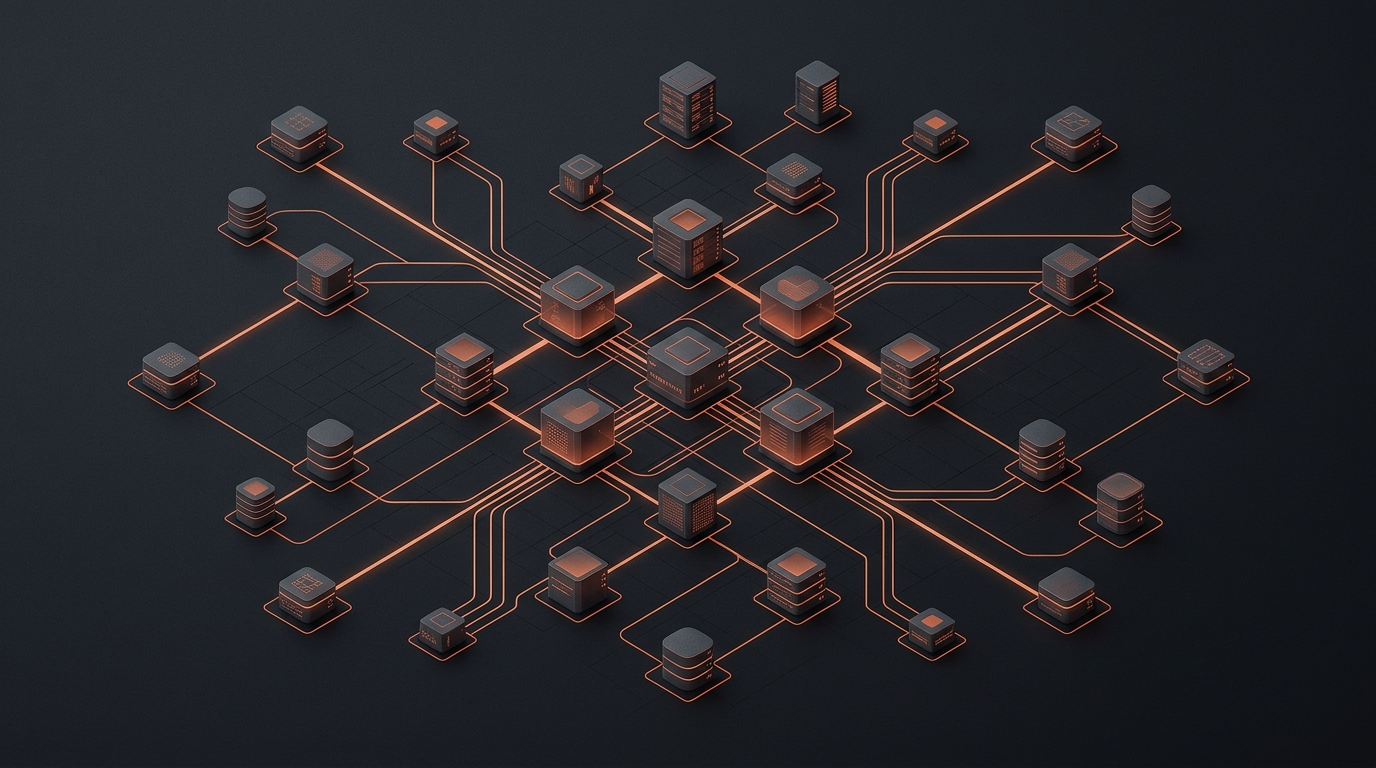
The integration of physical field operations with digital enterprise systems—often termed ‘phygital’ [[architecture](/blog/qr-code-architecture-connecting-200-guests-to-one-gallery)](/blog/tigerbeetle-core-system-architecture-deconstructing-performance-engineering)—represents one of the most complex challenges in modern distributed systems. When dealing with assets spanning thousands of square miles, such as energy grids, logistics networks, or smart manufacturing plants, the primary hurdle is not merely data ingestion, but the maintenance of high-fidelity state synchronization between the physical world and its digital representation.
Engineers often underestimate the entropy inherent in field deployments. Unlike data center environments, field assets exist in high-latency, intermittently connected, and heterogeneous hardware landscapes. Building a robust architecture requires a shift from centralized batch processing to a multi-tiered edge-to-cloud topology that prioritizes local autonomy while ensuring global data integrity.
The Multi-Tiered Synchronization Model
Effective phygital architecture relies on a three-tiered hierarchy: the Edge Tier, the Fog/Regional Tier, and the Enterprise Data Lakehouse. Each layer serves a distinct purpose in reducing the bandwidth requirements while maintaining the necessary granularity for real-time decision-making.
Edge Tier Autonomy
The edge must be capable of processing events locally. By utilizing lightweight message brokers or stream processors on-device, we can filter noise and perform immediate anomaly detection without waiting for a round-trip to the cloud. This ‘local-first’ approach prevents the saturation of backhaul links and ensures that critical safety systems remain functional during network partitions.
interface EdgeTelemetry {
  assetId: string;
  timestamp: number;
  metrics: Record<string, number>;
  status: 'nominal' | 'degraded' | 'critical';
}

// Local processing logic to filter high-frequency noise
function processLocalEvents(event: EdgeTelemetry): boolean {
  if (event.status === 'critical') return true;
  return event.metrics.delta > THRESHOLD_LIMIT;
}
Handling Data Inconsistency and Clock Skew
In distributed field environments, assuming synchronized system clocks across thousands of devices is a recipe for failure. Instead, architectures should adopt vector clocks or logical timestamps to maintain causal ordering. When events arrive at the enterprise data lake, they must be processed using a stream-processing framework that supports out-of-order event handling and watermarking.
The integrity of a digital twin is only as strong as the temporal ordering of its state transitions. If the digital representation diverges from the physical state due to network latency, the model becomes a liability rather than an asset.
Trade-offs in Schema Evolution
Field hardware evolves slower than the software stack. You will inevitably face scenarios where legacy devices report data in proprietary binary formats alongside modern sensors transmitting JSON over MQTT. A centralized schema registry is essential to decouple the ingestion layer from the downstream analytics engine. By enforcing schema validation at the ingestion gateway, you prevent ‘poison pills’ from corrupting downstream analytical tables.
- Use Avro or Protobuf for efficient serialization of heterogeneous field data.
- Implement a schema registry to manage versioning across fleet-wide deployments.
- Ensure that the ingestion gateway can handle partial schema updates without breaking downstream pipelines.
Securing the Bridge
Securing phygital systems requires a zero-trust approach to edge devices. Each sensor or gateway must be treated as a potentially compromised node. Mutual TLS (mTLS) should be the baseline for all communication, complemented by a hardware-based Root of Trust (RoT) for identity verification. Without these measures, the data pipeline becomes an attack vector for physical asset sabotage.
Conclusion
Bridging physical footprints with enterprise data systems is a balancing act between local autonomy and global visibility. By moving compute to the edge, adopting robust temporal ordering techniques, and enforcing strict schema management, engineering teams can build resilient systems that treat physical assets as first-class citizens in the data ecosystem. The future of industrial operations lies not in simply gathering more data, but in creating a verifiable, high-fidelity bridge between the physical and the digital.